I’ve partnered with California Almonds on this post. All opinions are my own.
Looking to eat less meat? Eating a more plant-based diet is good for your overall health and body. Here's some tips for packing lunches.
When I was in high school, I stopped eating meat. It was a sudden and impulsive change one New Year's Day, that impacted how my family ate forever. Even after I started eating meat again, the more plant-based eating remained a constant in our lives.
Fast forward to today. I'm endeavoring to eat a more plant-based diet with my kids. It's one filled with fruits, vegetables, whole grains and legumes. We still eat meat -- chicken and fish are our favorites at home, but a good burger once in awhile is great too -- but our portion sizes are smaller, my standards for purchasing meat are higher and the frequency with which we eat it is diminishing. Instead, we're loading up on fruits and veggies, and choosing more creative recipes.
And we're eating more plant based proteins as well -- nuts, quinoa, beans and lentils, for example. (Psst! There's a great article from the Harvard Medical School on protein, and how much you should be eating.) Our diet is all a great work in progress -- both how we eat and what we eat. It's important though, and eating better is a big priority for me and for us.
And one area that I've paid particular attention to is our lunches. Packing healthful lunches for all of us is necessary -- they fuel us through our days at school and work. So, I do a few things to make packing them each morning a little easier.
How to Plan Ahead for Packing Healthful Plant-Based Diet Lunches
- Prepare veggies -- Rinse and cut veggies in dip-able size pieces. Store in a resealable container. Peppers, carrots and celery are best for this, but you can also rinse and store grape or cherry tomatoes with them, as well as snow peas. These veggies can also be used in dinners -- either to be cooked or served raw.
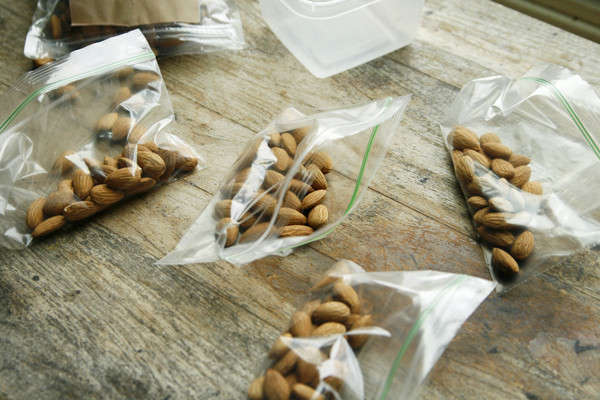
- Portion out nuts for snacks -- One serving of nuts is one ounce. Rather than buy pricy pre-portioned bags, I make my own, using my kitchen scale to portion out nuts for servings. Reusable containers or resealable bags are great for this.
- Cook quinoa, if we'll need it -- Did you know that you can cook quinoa ahead of time and refrigerate it until you're ready to use it (within five days or so)? It's a quick cooking grain (well, technically a seed, but it behaves like a grain), but making it ahead means you can mix it into salads, soups or heat a little for dinner in no time anytime.
- Make ahead mains -- Sandwiches were a stand-by of my childhood lunches, but I don't make them that often for my kids. Instead, I pack soups, pasta dishes, salads and grain bowls, which I make ahead of time for easy packing. Recipes like Slow Cooker Tomato Lentil Soup, Roasted Brussels Sprouts Salad and Bucatini Pomodoro are easy to make ahead and reheat (if necessary) for lunches. Of course, in a pinch, I also always have bread on hand for peanut butter or almond butter and jelly sandwiches too.
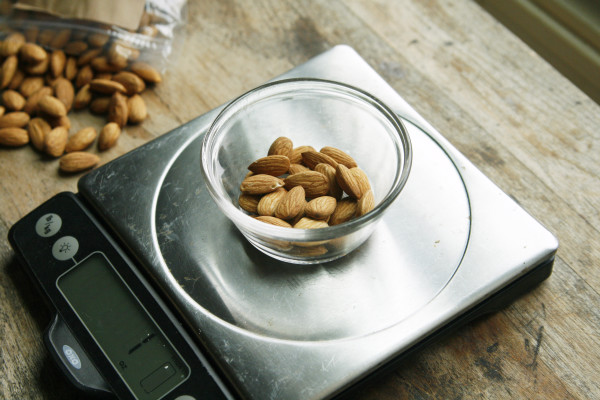
With regards to nuts for snacking, California almonds are one of our favorites. They are sustainably grown and have 6 grams of protein per serving. So, they are awesome for vegetarian bento box style lunches, snacks and so much more. Measuring out portions ahead of time makes it easy to grab and go.
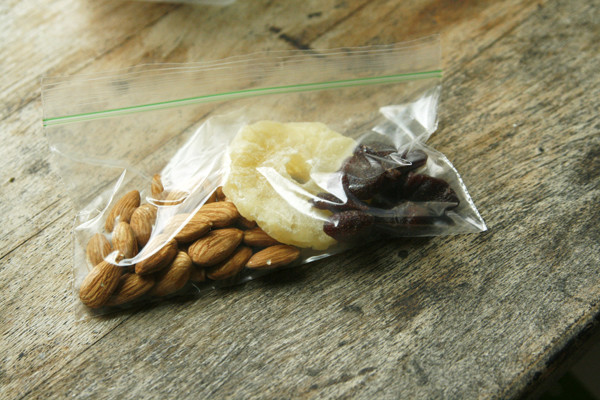
I also use those already portioned baggies of nuts to make quick trail mixes for lunch, hiking or whenever. Dried fruit (pineapple and strawberries are pictured here) are delicious with the nuts.
The bottom line? My health and the health of my kids is incredibly important, and eating a more plant-based diet is helping us eat better everyday.
For more information on California Almonds sustainable practices and the importance of plant-based protein, visit Almonds.com and check out the Power of Plant-Based Meals handout. Be sure to also socialize with California Almonds via Facebook, Twitter, Instagram, Pinterest and the California Almonds blog for recipes, almond and more info on sustainability.
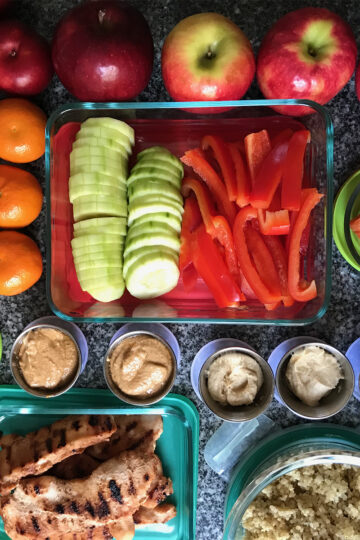
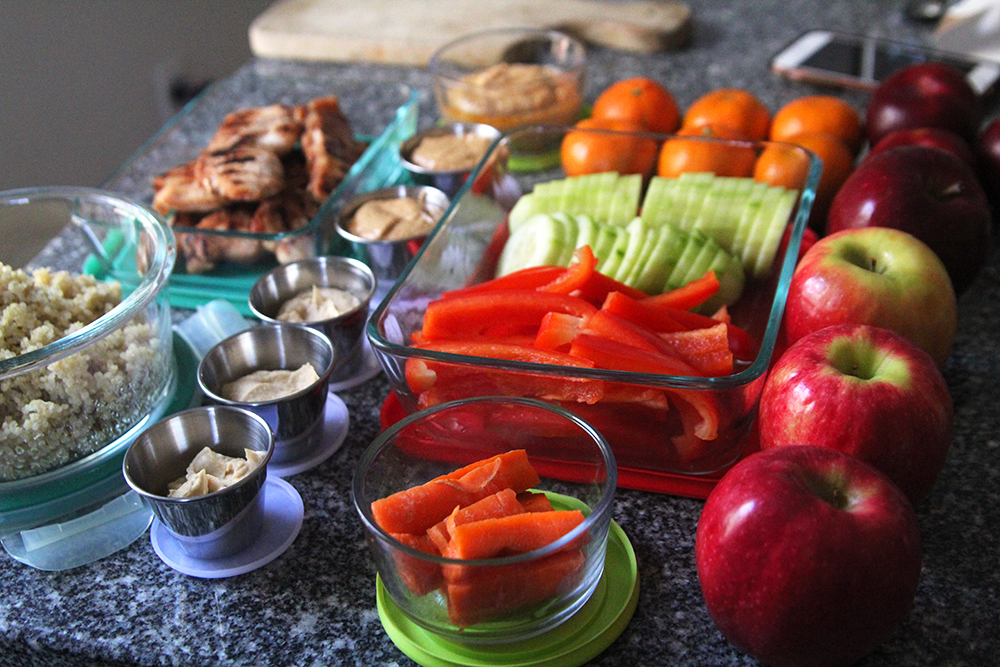
I typically make quinoa on Sundays for our weekday lunches.
Some good tips! We are pretty similar here...my wife was eating vegetarian when we first met so that's what we ate most of the time, now mix in meat and fish too but lots of veggie based meals.
Sarah, snacks and lunches are so important in a healthy diet! My kids always take nuts and dried fruit as their snack and they love California Almonds. And I typically pack lunches as I am cleaning up from dinner--leftovers make great lunches!
I really really need to get better at this plant-based eating! You have inspired me!
A filling, meatless lunches can be a tricky proposition. Portioning snacks ahead of time is a great way to stay on track making healthy choices.
I went vegetarian in high school as well. Although I eat meat now, I still eat mostly vegetarian. I love these tips. My son starts kindergarten this fall and I'll be packing his lunch every day!
Great informative post with lots of helpful tips, thanks!
This is a great post, and something I'm always trying to work into our everyday lives, as well. I love using snack size baggies to portion out things for lunches all week long.
My husband packs baggies of nuts every workday and I usually have some in my purse. They are the perfect mid-day snack to get you past the fast food stops.
I'm a total meat freak BUT love my veggies just as much. I love that you're teaching your kids to have a wide variety of foods in their diet. That is so important 🙂
Good for you on eating a plant based diet. I've been trying to do more of that, but can't seem to give up my chicken. These are all great tips on healthy, delicious and filling lunches.